
Why Your SEO Impressions Are Rising While Clicks Are Falling?

There is a strange pattern showing up in Google Search Console for many brands.

Impressions are going up.
Clicks are going down.

On the graph, it looks like a crocodile opening its mouth. The top jaw is impressions rising. The bottom jaw is clicks falling. This is now commonly called the Crocodile Mouth effect.

For marketers, founders, and SEO teams, it is one of the clearest signs that search behavior has changed.

People are still searching. Your brand is still being discovered. But users are not always clicking anymore.

Why?

Because Google AI Overviews, featured snippets, knowledge panels, Reddit threads, YouTube summaries, and AI chatbots are increasingly answering questions directly before a user reaches your website.

This is the zero-click reality.

The goal is no longer just to rank. The goal is to become the answer.

Why the Crocodile Mouth Effect Is Happening

Traditional SEO was built around one simple journey:

Search → Click → Website → Conversion.

But today, the journey often looks like this:

Search → AI answer → Brand mention → Later action.

A user may ask Google, ChatGPT, Perplexity, or Gemini a question and get a complete answer without visiting any website. For informational queries, this means the click may disappear completely.

For example, a user searching “best SEO agency in Mumbai for startups” may not click through ten agency websites. They may read an AI Overview, check a few brand names, look at Google Maps, skim Reddit or YouTube, and then search the brand directly later.

This means brands need to optimize not only for search rankings, but also for AI visibility, brand recall, local discovery, and action-driven intent.

Optimize for AI Overviews, Not Just Google Rankings

SEO is evolving into AEO: Answer Engine Optimization.

AI tools do not simply look for keyword-stuffed pages. They look for clean, structured, trustworthy answers that can be easily extracted, summarized, and cited.

To improve your chances of being included in AI Overviews, structure your content clearly.

Start every important page or blog with a direct answer in the first one or two sentences. Then expand with short paragraphs, bullet points, comparison tables, FAQs, and practical examples.

For example, instead of starting with a long introduction like:

“Digital marketing has changed a lot over the years…”

Start with:

“The Crocodile Mouth effect in SEO happens when Google Search Console impressions rise while clicks fall, usually because users are getting answers directly from AI Overviews, snippets, or search results without visiting the website.”

That is the kind of answer AI can understand quickly.

Use Proprietary Data and Real Case Studies

Generic content is easy for AI to summarize and ignore.

Unique content is harder to replace.

Brands should publish original insights, local market observations, campaign learnings, case studies, customer data, pricing benchmarks, and experience-based opinions.

For a Mumbai-based brand, this could include:

“Based on our campaigns for Mumbai real estate brands, lead quality from hyperlocal landing pages outperformed generic city-wide pages.”

For an e-commerce brand, it could be:

“Across performance campaigns, product pages with creator-led UGC assets saw stronger engagement than static catalog creatives.”

These kinds of insights make your brand more useful as a source. AI systems are more likely to reference pages that contain specific, experience-backed information rather than recycled generic SEO blogs.

Think Beyond Google: Search Is Everywhere Now

Your customers are no longer searching only on Google.

They are searching on YouTube, Reddit, Instagram, LinkedIn, TikTok, Google Maps, Perplexity, ChatGPT, and Gemini.

This means your brand needs to appear across the platforms where people and AI systems discover information.

For Mumbai businesses, this is especially important. A user looking for a service may check Google Maps, Instagram posts, YouTube reviews, Reddit discussions, and AI recommendations before making a decision.

Your brand should be visible in all these discovery paths.

That means:

  • Google Business Profile should be updated.
  • YouTube videos should answer actual customer questions.
  • Reddit and Quora discussions should mention your category naturally.
  • Instagram and LinkedIn should carry strong brand signals.
  • Website pages should clearly explain what you do, where you operate, and why you are credible.

Search is no longer one platform. Search is an ecosystem.

Win Local Search in Mumbai

For Mumbai-based businesses, local SEO is still a major opportunity.

AI may answer general questions, but users still need to take action when they are looking for a nearby service, agency, clinic, restaurant, store, consultant, or vendor.

That is where local optimization matters.

Your Google Business Profile should have updated services, photos, reviews, location details, business hours, website links, and FAQs.

Your website should also include location-specific pages where relevant.

For example:

“Performance Marketing Agency in Mumbai”
“SEO Agency for D2C Brands in Mumbai”
“Branding Agency for Real Estate Companies in Mumbai”
“Website Design Agency in Andheri”
“Social Media Marketing Agency for Restaurants in Bandra”

These pages should not be thin keyword pages. They should include examples, local context, pricing indicators, service details, testimonials, and clear CTAs.

The more specific and useful the page, the better your chance of converting high-intent traffic.

Focus on Action-Driven Long-Tail Keywords

Informational searches are most vulnerable to zero-click behavior.

Queries like “what is SEO” or “what is performance marketing” can easily be answered by AI.

But action-driven queries still have click potential because the user needs to compare, book, buy, contact, or sign up.

Instead of only targeting broad keywords, brands should target long-tail commercial intent queries such as:

“SEO agency in Mumbai for SaaS companies”
“performance marketing agency for real estate leads”
“Shopify website design agency in India”
“best influencer marketing agency for UAE fintech brands”
“AI creative agency for Meta ads”
“Google Ads agency with landing page support”
“branding agency for premium D2C brands”

These searches indicate that the user is closer to taking action.

The more specific the intent, the more valuable the click.

Build Brand Recall Even Without the Click

In a zero-click world, the user may see your brand but not visit your website immediately.

That is why brand recall matters.

Your content should include memorable positioning, clear service language, strong visual identity, and repeated brand identifiers.

If AI summarizes a topic and includes your brand as one of the sources, the user should still remember who you are.

For example, Social Donut should not just be described as a “digital marketing agency.”

It should be positioned as:

“A design-first marketing agency helping brands grow through branding, content, performance marketing, SEO, websites, and AI-led creative systems.”

That is more memorable. It gives the brand a sharper identity.

In the AI search era, vague brands disappear. Specific brands are remembered.

Make Every Page Conversion-Ready

Since fewer users may click, every click that does come through becomes more valuable.

Your landing pages, blogs, service pages, and case studies should not only educate. They should move the user forward.

Every important page should include:

  • A clear opening answer
  • Proof of expertise
  • Examples or case studies
  • FAQs
  • Internal links
  • Strong CTA
  • Contact or booking option
  • Trust signals
  • Local relevance, where needed

The goal is to turn your website from an information library into a conversion engine.

What Brands Should Do Now

The Crocodile Mouth effect is not a reason to panic. It is a sign that SEO needs to evolve.

Brands should stop thinking only in terms of rankings and start thinking in terms of visibility, authority, recall, and action.

The future of SEO will belong to brands that can answer clearly, prove credibility, show up across platforms, and convert high-intent users when they are ready to act.

At Social Donut, we believe the next phase of search is not just about getting more traffic.

It is about becoming impossible to ignore.

Final Takeaway

If your impressions are rising but clicks are falling, your SEO is not necessarily failing.

Your content may already be visible.

Now the job is to make it more useful, more memorable, more conversion-focused, and more AI-friendly.

Because in the age of AI Overviews and zero-click search, the winning brands will not just rank.

They will become the answer.

Winning the AI Discovery Game for D2C Brands

In today’s crowded D2C landscape, launching a product is easy. The real challenge is getting it discovered—and chosen. Buyers and AI models now filter, cross-reference, and rely on credible sources instead of just scrolling through generic search results.

You need more than a product page. You must be recognized by AI, trusted by humans, and present across the right content ecosystems.

Search Isn’t Linear Anymore — It’s a Trust Funnel

Here’s how discovery actually works in 2025:

  1. Search query (often conversational, intent-driven)
  2. Trusted domains only
  3. Evaluate for freshness & depth
  4. Cross-check across sources
  5. Filter fluff & shady sites
  6. Apply personal context (budget, use case, region)
  7. Shortlist the final 2–3 products

AI-powered tools—Google’s Gemini, ChatGPT, Perplexity etc—mirror this behavior. They answer based on credibility, structure, and consistency

Real Example: Finding Earbuds Under ₹2000

Instead of browsing dozens of generic posts, ChatGPT’s browsing tool—might search:

Earbuds under 2000 site:digit.in

Why? Because Digit.in is a highly trusted source. This query instantly filters out junk and delivers authoritative, AI‑rated content that’s more likely to be used in AI-generated responses .

If your product isn’t featured on trusted platforms like Digit, 91mobiles, or NDTV Gadgets360, it’s invisible to both people and AI.

This Applies to All D2C Categories

Whether you sell earbuds, serums, supplements, or decor, your product faces the same AI filter funnel. Visibility depends on:

  • Being cited by authoritative sources
  • Being referenced consistently across formats
  • Featuring in structured, up-to-date content

The AEO Playbook: How to Be the Default Answer

Here’s how top D2C brands are winning in 2025:

1. Be Present on Trusted Domains

Pitch your product to be included in “Top 10” or “Best of” listicles on niche authority sites—e.g., Digit, 91mobiles, NDTV Gadgets360 for tech, or Popxo and Vogue India for beauty. These are prime sources for AI‑scraped answers.

2. Structure Your Product Pages

Use schema markup like:

Product, Offer, AggregateRating, Review, FAQPage, VideoObject, ImageObject

This makes your content machine-readable and more usable by AI engines.

3. Create Use‑Case Content

Optimize for real queries:

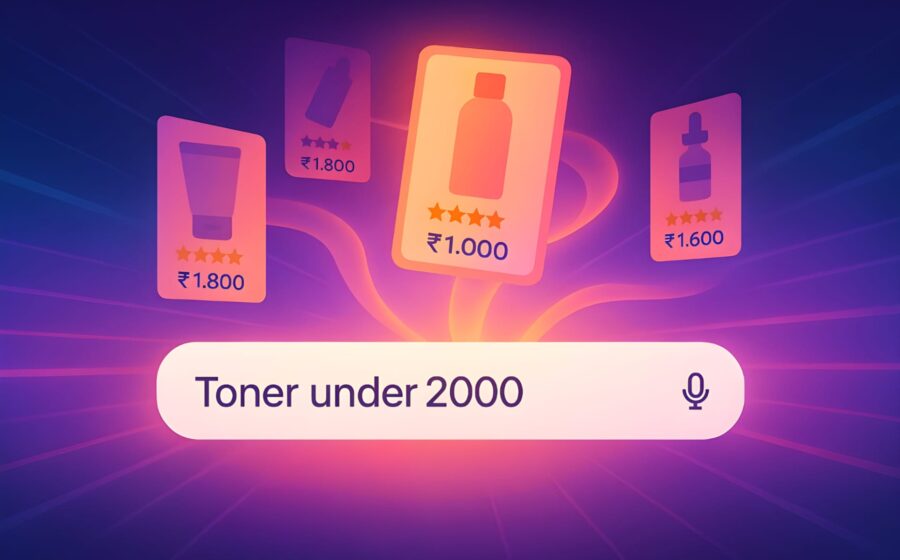
  • “Best earbuds for gaming under ₹2000”
  • “Face serum for humid Indian summers”
  • “Bedsheets under ₹1,000 for hot weather”

AI Systems prioritize answers aligned with conversational intent and structured content.

4. Build Cross‑Platform Validation

Ensure your product appears consistently across:

  • Your site
  • Trusted editorial platforms
  • YouTube & Shorts
  • Marketplaces (Amazon, Flipkart, Nykaa)
  • Social and forums

This cross-domain consistency is a strong credibility signal for AI.

TL;DR — It’s Not Just Visibility. It’s Trust by Design

In the era of AI-led discovery, you’re not just competing for clicks—you’re competing for context and credibility. Think like an AI:

  • Is your product structured for machines?
  • Covered by trusted third-party reviews?
  • Consistent across platforms and refreshed with real user feedback?

If yes, you’re not just showing—you’re being chosen.

🍩 Social Donut POV

We help D2C brands move from “just being listed” to becoming the default answer. With comprehensive AEO strategies—structured data, content funnels, reviews, and trusted placements—we build AI-ready ecosystems that convert.

Your product deserves to be found by humans and algorithms alike.

Ready to dominate the AI age? Let’s talk. 🍩✨

This website uses cookies to ensure you get the best experience on our website.